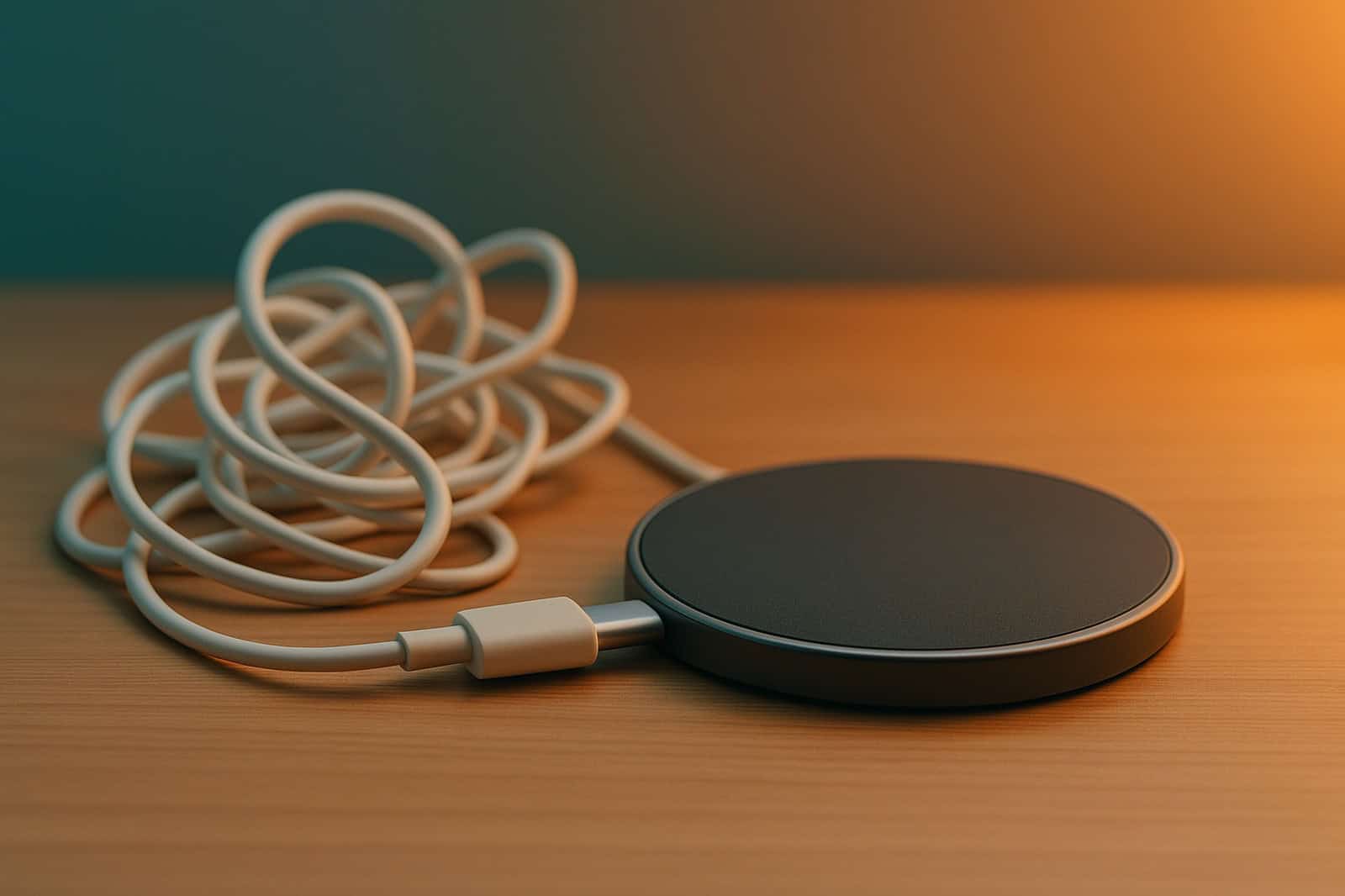
Ever feel like you’ve been lied to… by your own gadgets? Let’s talk about the “wireless” chargers that still need wires.
Can You Still Sue for False Advertising?
Because I swear… I smell a class-action lawsuit brewing.
The target? So-called wireless chargers.
Sure—you can set your phone on top of one… and it’ll start charging.
But the charger itself? Yeah… that bad boy still needs to be plugged in.
So tell me—how’s it “wireless” if there’s still a wire anywhere in the equation?
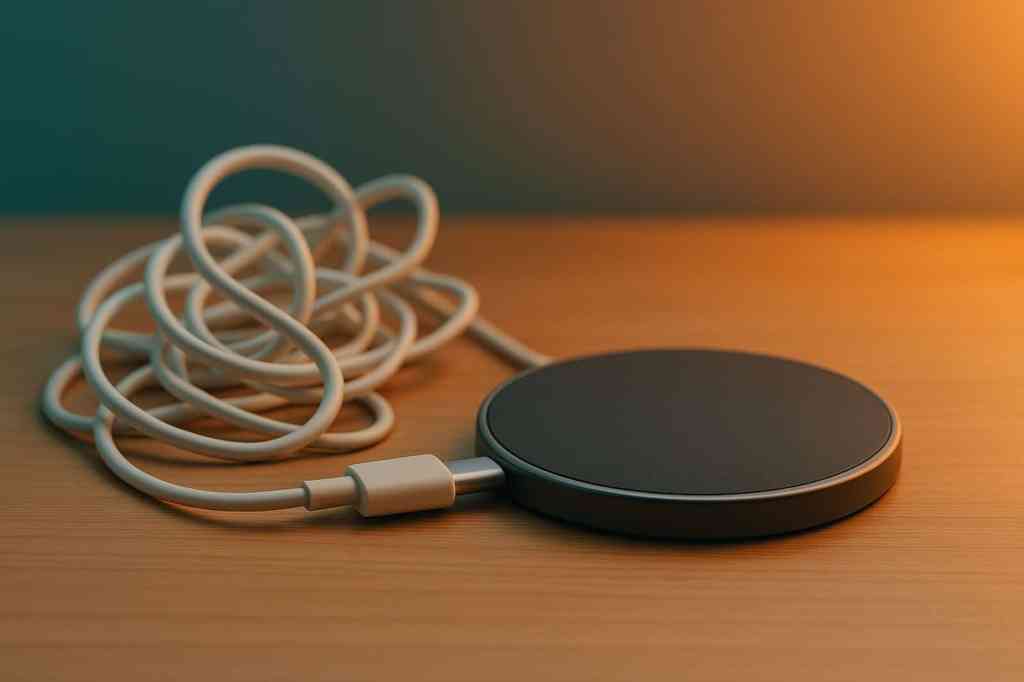
The Harsh $45 Amazon Lesson
I want my money back so I can blow it on something truly wireless… like a power bank.
Oh wait—power banks need charging too?
So what’s actually wireless?
Nothing.
Unless you’re running on batteries… or living that Bluetooth life.
Fun Fact: Nikola Tesla Did It First
Wireless charging isn’t even new.
Nikola Tesla was zapping energy through the air back in the 1890s—trying to power entire cities without wires.

And today?
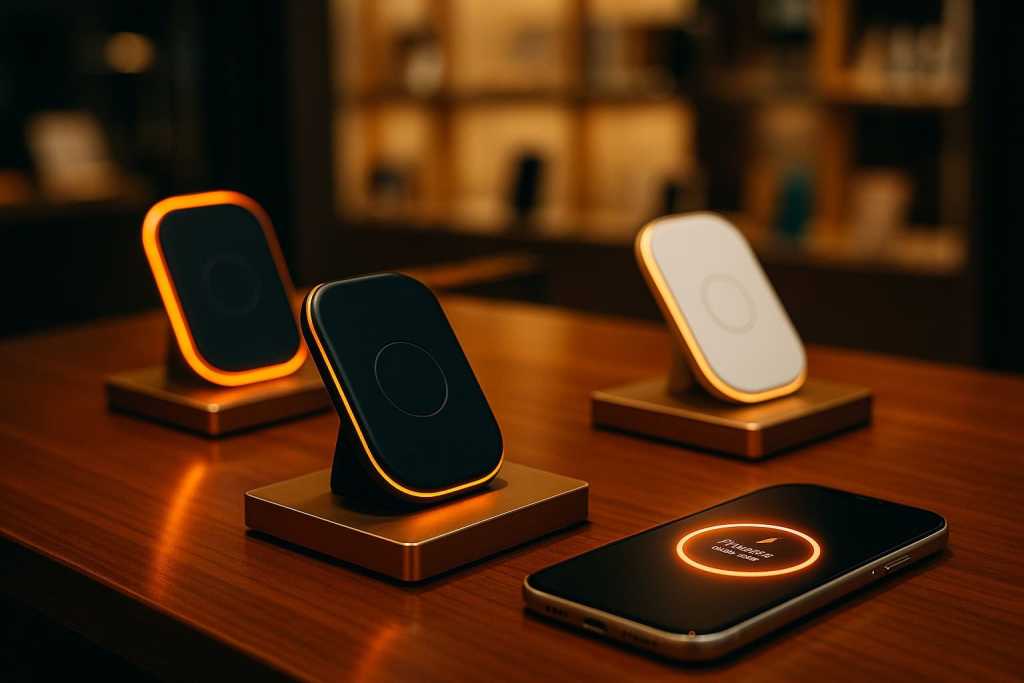
We’re using that same science… to power glowing frisbees that scream “tech bro aesthetic.”
How Wireless Chargers Actually Work (In Plain English)
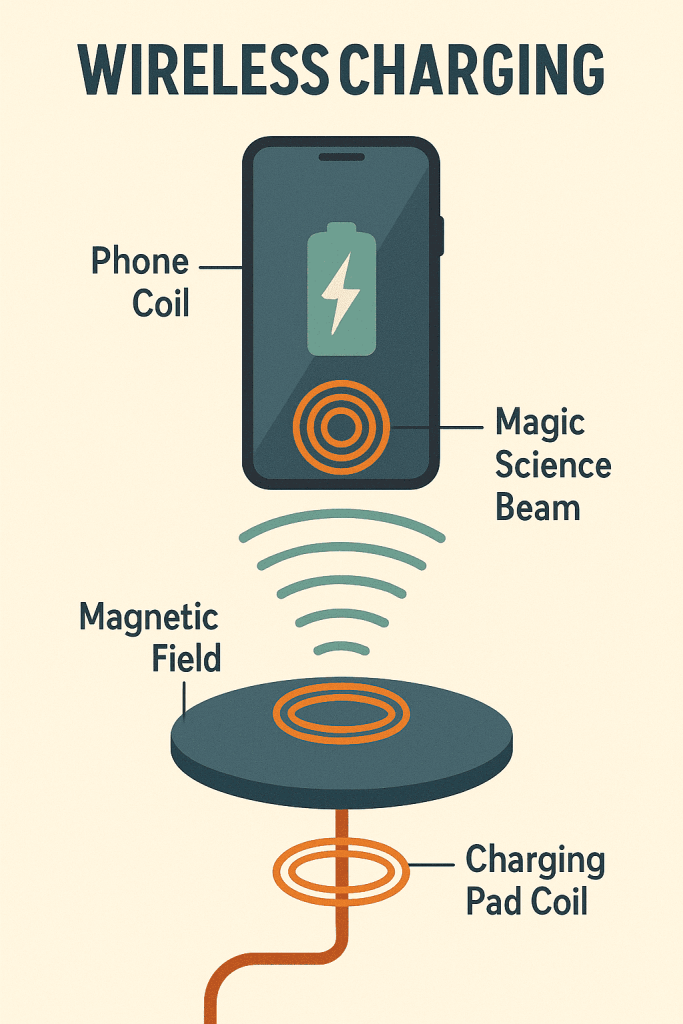
Wireless chargers use something called inductive charging — which sounds like wizard magic but is really just science being extra.
Here’s the quick and dirty version:
- Your charger has a coil of wire inside.
- Your phone also has a coil of wire inside.
- When the two coils get close, they create a magnetic field.
- That magnetic field transfers energy into your phone’s battery — no physical plug needed.
It’s basically a high-tech game of “keep the magnets close but don’t touch.”
The catch? That magnetic transfer is way less efficient than just plugging in a cable. That’s why your phone charges slower, gets warmer, and occasionally stops charging if you sneeze near it.
Think of it as the Room Service of charging — convenient, a little overpriced, and definitely slower than walking down to the kitchen yourself.
Why Wireless Chargers Are Slower Than My Grandma’s Dial-Up
Here’s what really grinds my gears: the speed.
There should be a giant warning label:
“Charging is estimated to take 3–5 business days. Results may vary.”
And don’t even get me started on finding the “sweet spot.”
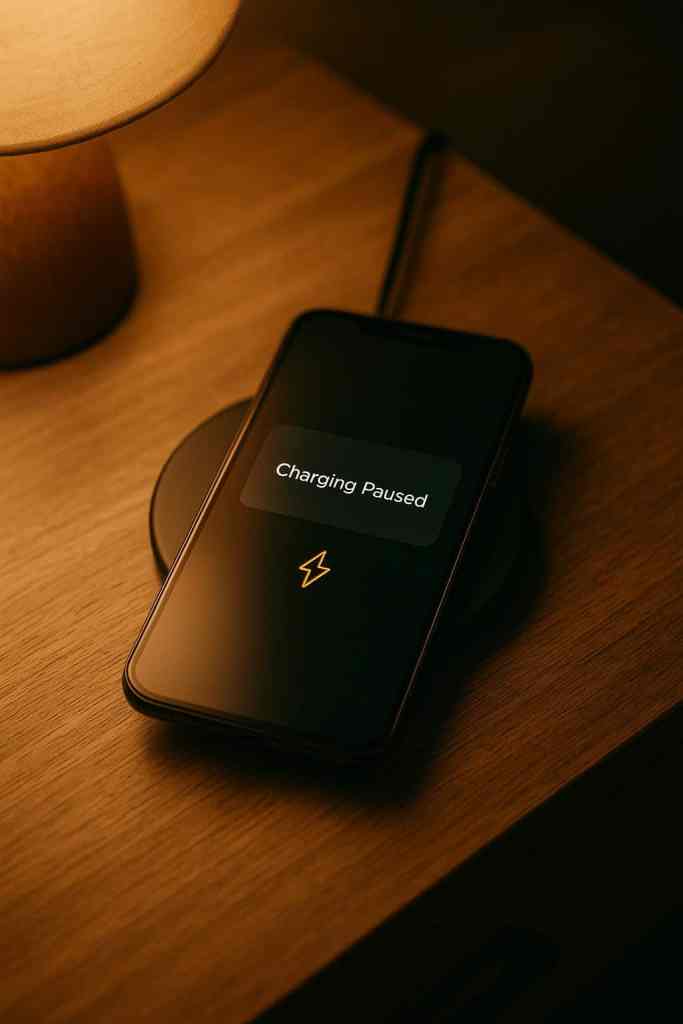
One millimeter off and your phone won’t charge…
It’s like playing Twister: Phone Edition.
Left hand red. Right foot blue.
Now hold your breath… or your phone stops charging.
The Only Two Reasons to Own One
Reason 1: Your charging port is busted.
These glowing frisbees will keep your phone alive. That’s a win.
Reason 2: They scream,
“I’m fancy enough to own a wireless charger… but not rich enough to hire someone to plug my phone in for me.”
The T-Mobile Sales Pitch Nobody Asked For
For something that doesn’t do a whole lot, they’re sure popular…
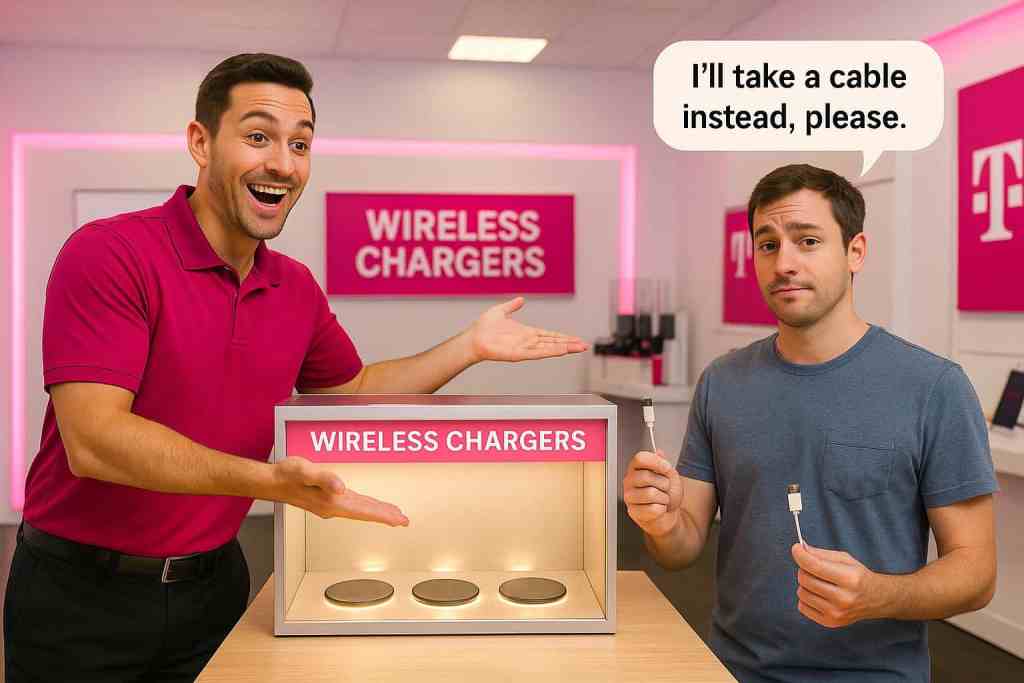
Just ask that T-Mobile rep what he thinks.
He’ll give you a 20-minute pitch on why you should buy one.
Bro, put the fries in the bag and just give me a cord.
To Be Fair… They Might Save the Planet (Kinda)
Maybe they’re not as wasteful as they seem.
Fewer cords means fewer wires fraying and heading straight to a landfill.
While keeping a few cables out of landfills isn’t the biggest environmental victory… it counts for something.
Wireless Chargers: The Pros, The Cons, and The Lies
The Pros:
- Convenience factor – Drop your phone down and walk away. It’s like a charging valet that never talks back.
- Less wear on your charging port – No plugging and unplugging means your phone’s port lasts longer.
- Cleaner look – No dangling cords ruining your nightstand aesthetic.
The Cons:
- Slower than a sloth on vacation – If you need a quick top-up, forget it.
- Awkward “sweet spot” hunting – Place your phone one millimeter off and it’s basically a coaster.
- Still needs a cord – That “wireless” part is marketing smoke and mirrors.
The Lies:
- “It’s cutting edge.” – Sure, if you think 1890s science is bleeding edge.
- “It’s truly wireless.” – You literally plug the charger in. Next.
Want a more traditional take on the pros and cons? Check out Belkin’s guide to wired vs wireless charging for a less sarcastic (but still helpful) breakdown.
Should You Buy One? The Honest Truth
So, should you join the glowing frisbee club?
Here’s my totally unbiased advice:
Buy a wireless charger if…
- Your phone’s charging port is busted or unreliable.
- You’re the type of person who values convenience over speed.
- You want your desk or nightstand to look like a tech showroom.
- You charge overnight and don’t care how long it takes.
Skip it if…
- You’re in a hurry most of the time. (Seriously, get a cable.)
- You travel a lot and don’t want to haul around a delicate charging pad.
- You’re not into paying more for something that technically does less.
My Take:
Wireless chargers are like avocado toast — cool, trendy, and Instagram-worthy… but not exactly essential. If you’re buying one, you’re doing it for the vibe, not because it’s the fastest or most practical charging method on the planet.
Think of them as nightstand jewelry: nice to look at, occasionally functional, but mostly there to say “Look at me, I’m fancy.”
Your Turn
Do you use a wireless charger? Is it a game-changer or the biggest tech scam since “unlimited” data plans? Drop your thoughts below.

Leave a Reply